

Choosing a commercial truck service shop matters more than most fleet operators realise. A quality shop keeps your fleet operational and controls total maintenance costs. A questionable shop produces recurring problems, higher costs, and eroded trust over time. This guide walks through what to look for and what to avoid when selecting a commercial truck repair shop for your fleet.
Certifications and Credentials
ASE Certification
Automotive Service Excellence (ASE) certification indicates technicians have demonstrated competency through standardised testing. Master Technician status requires certification in multiple areas. Look for shops with predominantly ASE-certified technicians.
Manufacturer Training
Certification from specific manufacturers (Cummins, Detroit Diesel, Caterpillar, Volvo, etc.) indicates specialised expertise. Complex modern engines benefit from manufacturer-trained technicians.
DOT Inspection Certification
Federal certification to perform annual DOT inspections. Required for the shop to issue compliance certificates.
Insurance and Bonding
General liability insurance, garage keeper’s insurance, workers’ compensation. Verify current coverage. Cheap shops sometimes carry inadequate insurance.
Facility and Equipment
Dedicated Commercial Bay
Commercial truck repair requires appropriate lifts, ceiling clearance, and floor space. Light-duty facilities cannot properly service heavy trucks.
Diagnostic Equipment
Modern trucks require sophisticated diagnostic equipment. Multiple OEM diagnostic software licenses indicate serious commercial commitment.
Parts Inventory
Common parts stocked reduces downtime. Emergency repair capability depends on parts availability.
Specialised Tools
Custom hydraulic hoses, flywheel machining, and other specialised capabilities indicate serious investment. PFM Fleet Service offers services like custom hydraulic hoses and flywheel machining that many shops cannot provide.
Service Capabilities

Full Truck Range
Quality commercial truck repair shops handle light-duty, medium-duty and heavy-duty vehicles. Specialisation in one category is fine but limited-scope shops require multiple relationships.
Both Shop and Mobile Service
Mobile service for routine work and shop capability for complex repairs. The combination offers maximum flexibility.
Specialty Services
Hi-rail gear repair custom hydraulic work, machining capabilities. Broad specialty coverage handles unusual situations.
Communication and Transparency
Written Estimates
Estimates in writing before work begins. Details itemised. Verbal estimates create disputes about scope and cost.
Progress Communication
Regular updates during repair. Prompt notification of any changes or additional issues discovered. Silence during repair suggests poor communication generally.
Detailed Invoices
Complete invoices showing labour hours, parts used, and work performed. Vague invoices are a red flag.
Explanation of Work
Technicians willing to explain what was found and repaired. Willingness to answer questions.
Warranty Terms
Parts Warranty
Manufacturer warranty on parts. Duration varies by part type.
Labour Warranty
Shop warranty on labour. Typically 30-90 days minimum; quality shops offer longer.
Overall Warranty Terms
Clear written warranty terms. Understanding of what is covered and what is not.
Pricing Structure

Standard Labour Rate
Published shop labour rate. Should be consistent, not variable by customer.
Diagnostic Fees
Typically flat fee for diagnostic time. Fair shops apply diagnostic fee to repair cost if work is authorised.
Emergency Rates
After-hours or emergency service typically higher. Rates should be defined in advance.
Parts Pricing
Shops mark up parts (typically 20-40%). Reasonable markup covers overhead. Extreme markups are red flags.
Reviews and Reputation
Multi-Platform Reviews
Google Reviews, BBB industry-specific platforms. Consistent patterns across platforms indicate reliable reputation.
Time in Business
Long-established shops (10+ years) demonstrate sustained customer satisfaction. New shops can still be excellent but carry higher uncertainty.
Local Reputation
Ask other fleet operators in your area for recommendations. Peer references often more reliable than online reviews.
Red Flags to Avoid
Vague Pricing
“We’ll see when we get into it” without written estimates. Vague pricing creates disputes.
Cash-Only Preference
Legitimate shops accept multiple payment methods. Cash-only preference suggests cash flow issues or tax avoidance.
Persistent Upsell Pressure
Shops that pressure you into unnecessary work erode trust. Recommendations should be based on your truck’s actual condition.
No Warranty on Work
Quality shops warranty their work. Absence of warranty is a serious red flag.
Poor Facility Condition
Cluttered, disorganised, dirty facilities suggest similar approach to work quality. Professional shops maintain professional facilities.
High Employee Turnover
Frequent technician changes suggest management or business problems. Consistent long-term staff indicates good workplace and reliable expertise.
Building the Shop Relationship

Start with Routine Service
First engagement with routine PM service. Evaluate quality and communication.
Test Emergency Response
Emergency situations reveal how a shop actually operates under pressure. Consider arranging emergency call before you actually need one.
Formalise Fleet Account
Fleet accounts often qualify for volume pricing, priority service, and dedicated account management. Formal fleet relationships benefit both parties.
Regular Communication
Quarterly or monthly reviews. Discuss upcoming needs, upcoming issues, and any concerns. Communication prevents surprises.
The Value of Consistent Service
One shop that knows your fleet’s history delivers better maintenance decisions than shopping around based on price. Consistent service produces better long-term outcomes.
PFM Fleet Service Advantages
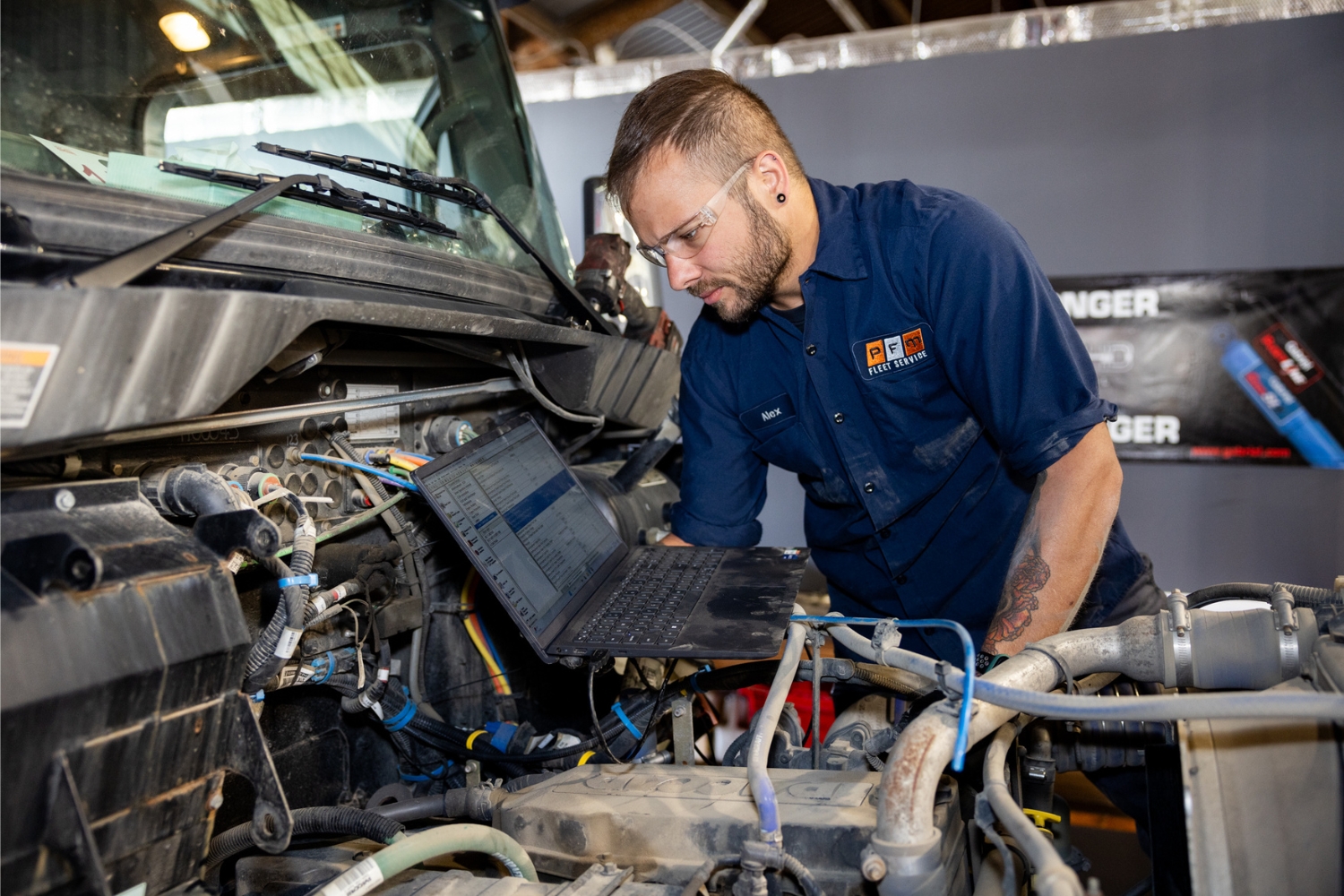
PFM Fleet Service offers: ASE-certified technicians, full range of light through heavy-duty commercial truck repair, mobile and shop service, DOT inspection certification, custom hydraulic hoses, flywheel machining, and specialty services. The Central Ohio location serves the region.
Emergency Response Capabilities
Fleets need shops that respond in genuine emergencies. Evening, weekend, and holiday response defines commercial truck repair quality. Test before you need it.
Long-Term Cost Comparison
Cheap shops appear to save money initially but often cost more over time through poor repairs, comeback work, and eventual major failures. Quality shops charge more but deliver better long-term value. The math favours quality.
Working with PFM Fleet Service
PFM Fleet Service serves Central Ohio commercial fleets with comprehensive repair and maintenance services. Contact us for a fleet consultation.
FAQs
What is the most important thing in a commercial truck repair shop?
ASE certification, appropriate facility, transparent pricing, warranty on work, and consistent communication.
Should I get multiple estimates for repairs?
For major repairs (over $2,000), yes. For routine service, established relationships often deliver better value.
What are the biggest red flags?
Vague pricing, cash-only preference, no warranty, pressure to upsell, poor facility condition.
How do I know if a shop can handle my specific truck?
Ask about their experience with your make and model. Verify diagnostic equipment for your engine platform.
Where can I contact PFM Fleet Service?
Visit our website for contact details.