

A complete fleet maintenance service program covers more than oil changes. It spans preventive care, unscheduled repair, compliance documentation, and lifecycle planning. Understanding what a complete program includes helps fleet managers evaluate providers and internal capabilities. This guide walks through every component.
The Three Pillars
Every complete program has three foundational pillars: preventive maintenance (scheduled service), corrective maintenance (repairs), and compliance documentation. Missing any pillar means an incomplete program with predictable gaps.
Preventive Maintenance Components

Scheduled Oil and Filter Service
Engine oil, oil filter, and often fuel filter service on manufacturer intervals. Foundation of engine longevity.
Fluid Services
Transmission fluid, differential fluid, coolant, brake fluid, power steering fluid. Each has specific intervals and testing methods.
Filter Services
Air filter, cabin filter, hydraulic filter, DEF filter (diesel). Restricted filters cost fuel efficiency and cause wear.
Tire Service
Pressure checks, rotation, wear inspection, replacement planning. Tires are the single largest maintenance cost item for many fleets.
Brake Service
Pad inspection, rotor measurement, brake fluid, air brake systems for CDL vehicles. Safety-critical.
Battery Service
Load testing, terminal cleaning, charging system verification. Batteries fail predictably; planned replacement beats roadside failure.
Corrective Fleet Maintenance Service Components
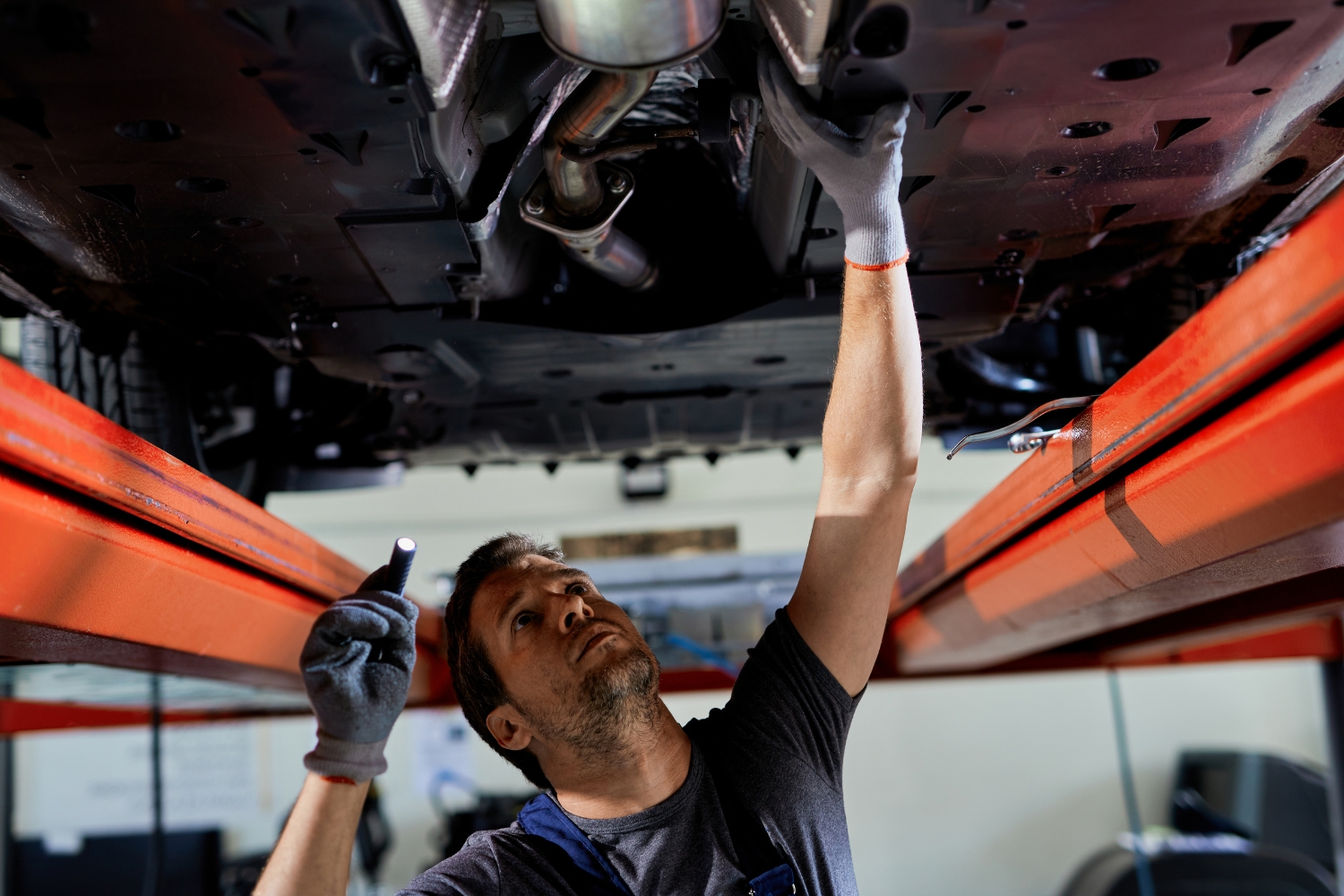
Diagnostic Capability
OEM diagnostic tools for each engine and chassis manufacturer in the fleet. Detroit Diesel DiagnosticLink, Cummins Insite, and generic OBD-II tools.
Engine Repair
In-frame repairs, cylinder head service, injector replacement, turbo service, cooling system repair. Major work requires specialized capability.
Drivetrain Repair
Transmission, differential, driveshaft, clutch service. Manual and automatic transmission specialists.
Electrical Repair
Wiring, sensors, control modules, lighting. Modern trucks are highly electronic, Felectrical expertise essential.
Body and Frame Repair
Collision damage, frame straightening, welding, corrosion repair. Not every shop handles this internally.
Emergency Roadside Service
24/7 mobile repair capability or partnership. Roadside failure costs escalate quickly without fast response.
Compliance Documentation
DOT Inspections
Annual DOT inspection with federal inspection form (per FMCSA §396.17). Must be conducted by a qualified inspector. Documentation retained per federal requirements.
DVIR Support
Systems for driver vehicle inspection reports (DVIRs). Digital DVIR systems integrate with fleet software.
Repair Order Documentation
Every service event is documented with parts, labor, and technician information. FMCSA requires a minimum 12 months retention.
EPA Compliance
Emissions system service (DPF, SCR, EGR). Documentation of proper emissions system operation. EPA compliance matters for both federal and state regulations.
Lifecycle Management
Vehicle Acquisition Support
Pre-purchase inspections. Spec recommendations based on duty cycle. New vehicle commissioning.
Warranty Management
Warranty claim processing, warranty repair coordination, warranty documentation retention. Recovers costs from OEM.
Replacement Planning
Data-driven replacement recommendations based on maintenance cost trends. Best programs analyze cost per mile and recommend replacement timing.
Disposal Support
End-of-life planning including auction preparation, parts salvage, and record transfer.
Specialty Services in a Fleet Maintenance Service Program
Refrigeration Unit Service
Reefer trucks and trailers need refrigeration expertise. Specialized capability or partnership.
Hydraulic Systems
Dump bodies, boom trucks, refuse trucks require hydraulic system service.
PTO and Auxiliary Systems
Vocational vehicles have PTO-driven auxiliary equipment requiring specific expertise.
Alignment
Commercial alignment equipment for heavy trucks. Extends tire life and improves fuel economy.
Support Services
Parts Inventory
Common wear parts in stock. Reduces downtime. Filter and fluid inventory typical.
Fluid Analysis
Used oil analysis for engine health monitoring. Detects developing problems before failure.
Training
Some programs provide driver training on vehicle inspection, defect reporting, and basic maintenance awareness.
Reporting
Regular reporting on fleet health, costs, upcoming service, and recommended actions. Data-driven fleet management requires data delivery.
In-House vs Outsourced Fleet Maintenance Service

In-House Advantages
Full control, potentially lower cost at scale, integration with operations. Requires facility, equipment, and skilled technicians.
Outsourced Advantages
No capital investment, access to specialized capabilities, flexibility to scale. Best for fleets under about 25 vehicles or those without ideal facilities.
Hybrid Approach
Common: in-house handles routine work, outsource specialty repairs and major overhauls. Best of both approaches for many fleets.
Evaluating a Program Provider
Certifications
ASE certification, OEM training, hazmat certification where applicable. Verify technician qualifications.
Capacity
Shop capacity matches your fleet needs. Not just space, labor hours available.
Response Time
Emergency and unscheduled repair turnaround. Written commitments where possible.
Reporting Systems
How service information reaches you. Digital, real-time, integrated with your systems ideally.
References
Similar-sized fleets served. Understand what similar operators experience.
PFM Fleet Service Programs
PFM Fleet Service offers complete fleet maintenance programs including preventive care, corrective repair, and compliance support. See services and contact details to discuss program setup at our website.
The Cost Structure
Complete programs typically price by vehicle per month (all-inclusive) or by individual service. Per-vehicle-per-month programs simplify budgeting. Individual service pricing offers granular control. Both work; choose based on operational preference.
FAQs
What’s included in a complete fleet maintenance service?
Preventive care, corrective repair, compliance documentation, and lifecycle management. Missing any component means an incomplete program.
In-house or outsourced — which is better?
Depends on fleet size and location. Under 25 vehicles, outsourced usually wins. Larger, hybrid approaches often work best.
How much does a fleet maintenance service cost?
Varies significantly by program scope, fleet mix, and service frequency. Per-vehicle-per-month pricing common; get quotes for your specific mix.
What certifications matter?
ASE certification and OEM training on your engine/chassis brands. Hazmat where applicable.
Where do I get a PFM program?
Visit our website to discuss a maintenance program tailored to your fleet.